
From early January, South Africa is tightening its grip on how electricity is supplied and consumed at household level. The new meter rules target informal electricity sharing, a practice that has quietly grown in townships, informal settlements, and even formal suburbs. Authorities say the changes are meant to protect the national grid, reduce losses, and ensure fair billing for everyone. With enforcement beginning on 25 January 2026, households, landlords, and tenants must understand what is changing, why it matters, and how it could affect their daily access to power.
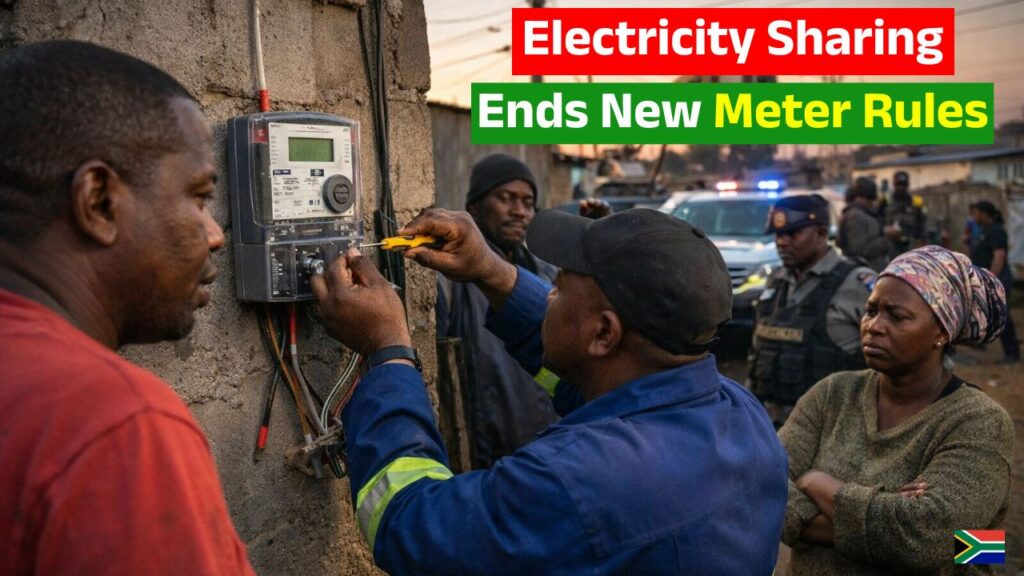
New electricity meter rules end informal sharing
The updated regulations focus on stopping unapproved connections where one meter supplies multiple homes. Officials argue this practice causes billing inaccuracies, increases network strain, and creates safety hazards for entire neighbourhoods. Under the new system, each dwelling must be linked to a registered meter, whether prepaid or postpaid. Municipalities and Eskom will conduct inspections to identify irregular setups. While the aim is fairness, many residents worry about higher monthly costs and the expense of compliance. Authorities say legal connections also improve service reliability, reducing outages caused by overloaded lines.

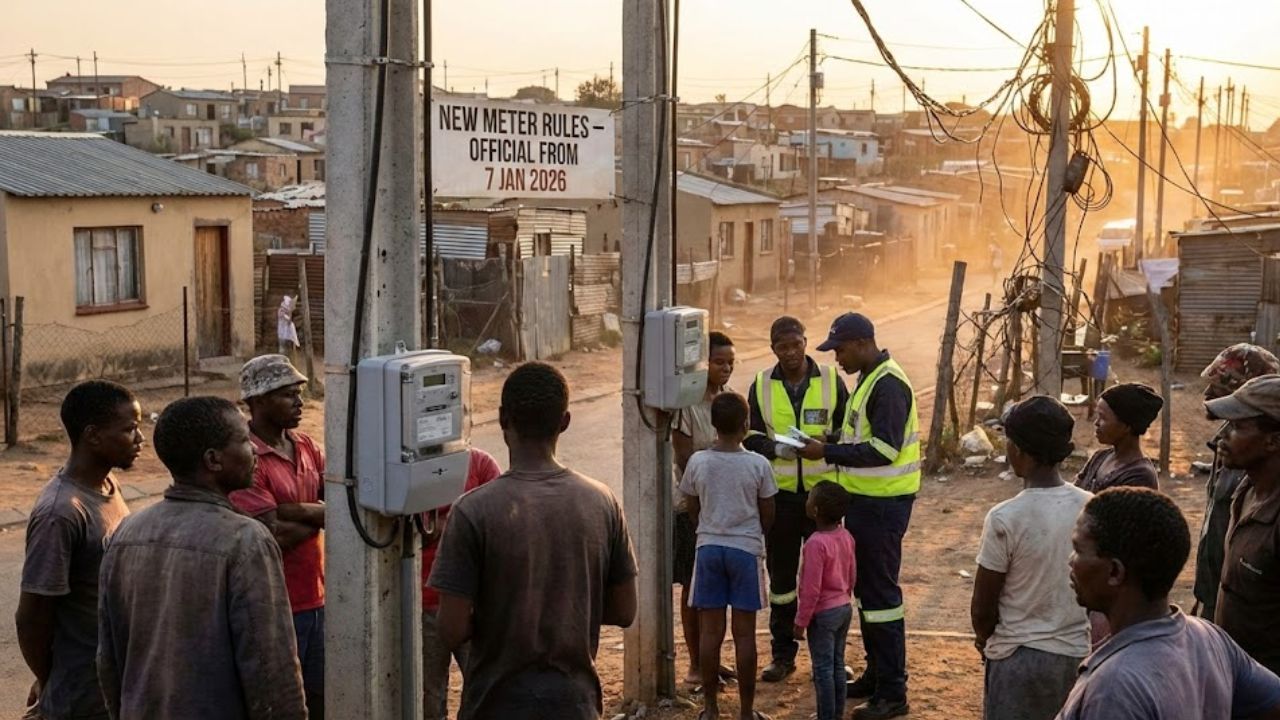
How South African households are affected
For many families, especially in shared yards or backyard rooms, these rules bring major changes. Tenants may now need individual meters, shifting responsibility for usage and payments. This is expected to improve usage transparency and reduce disputes, but it also raises concerns about installation fees and landlord cooperation. Municipalities claim that proper metering supports fair consumption tracking and helps prevent sudden disconnections linked to unpaid shared bills. In the long run, compliant households could benefit from better planning and fewer conflicts over electricity usage.
Why authorities are enforcing meter compliance
Government and utility providers say informal sharing contributes significantly to revenue losses and grid instability. By enforcing meter rules, they aim to curb unauthorised connections, strengthen grid stability, and support infrastructure upgrades. Proper metering also allows better forecasting of demand, which is critical during load management periods. While enforcement may feel strict, officials insist it promotes long-term sustainability. Communities that comply are more likely to see improved maintenance and faster fault response, as accurate data helps utilities allocate resources effectively.
Understanding the bigger picture
These changes reflect a broader push to modernise South Africa’s electricity system. Ending informal sharing is not just about control, but about creating a system that is safer and more predictable. With clear accountability, utilities can invest more confidently in upgrades, while households gain clearer insight into their usage. The transition may be uncomfortable at first, especially for low-income residents, but authorities argue that formal connections open doors to structured support programs and lawful access to essential services over time.

| Aspect | Old Practice | New Rule |
|---|---|---|
| Meter usage | One meter shared | One meter per dwelling |
| Billing | Split informally | Individual billing |
| Legal status | Often unregistered | Fully registered |
| Safety risk | High | Reduced |
| Enforcement start | Not enforced | 25 January 2026 |
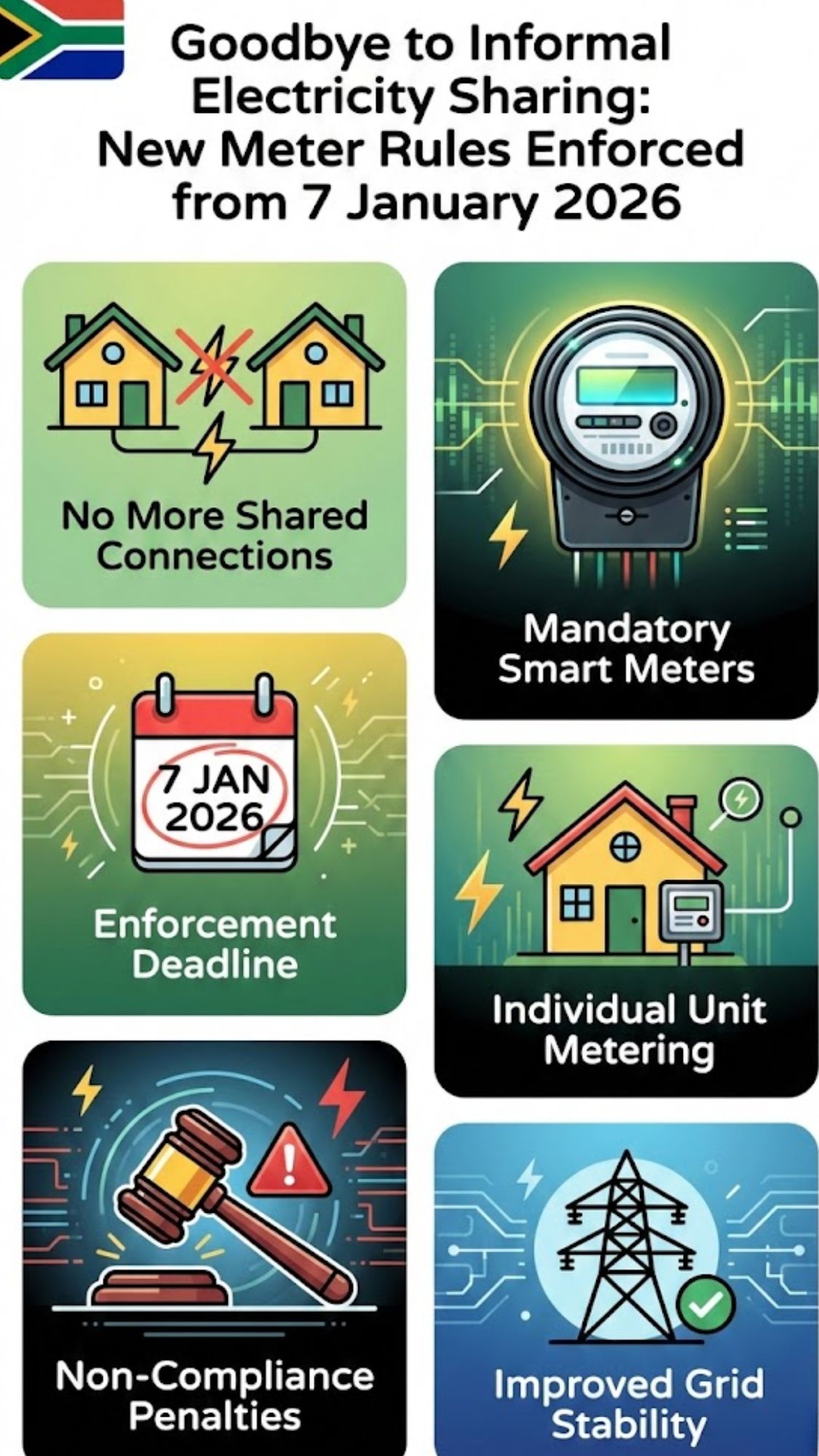
Frequently Asked Questions (FAQs)
1. Does this apply to all households?
Yes, any dwelling using electricity must have a registered meter.
2. Will tenants need their own meters?
In many cases, yes, especially for separate living units.
3. Are there penalties for non-compliance?
Authorities may disconnect supply or impose fines for illegal setups.
4. Can households get help with installation costs?
Some municipalities offer assistance programs, depending on eligibility.